Left untreated an increase in the intracranial pressure icp may lead to brain injury seizure coma stroke. Bleeding can form a rapidly expanding haematoma leading to rapidly rising icp if not treated promptly.
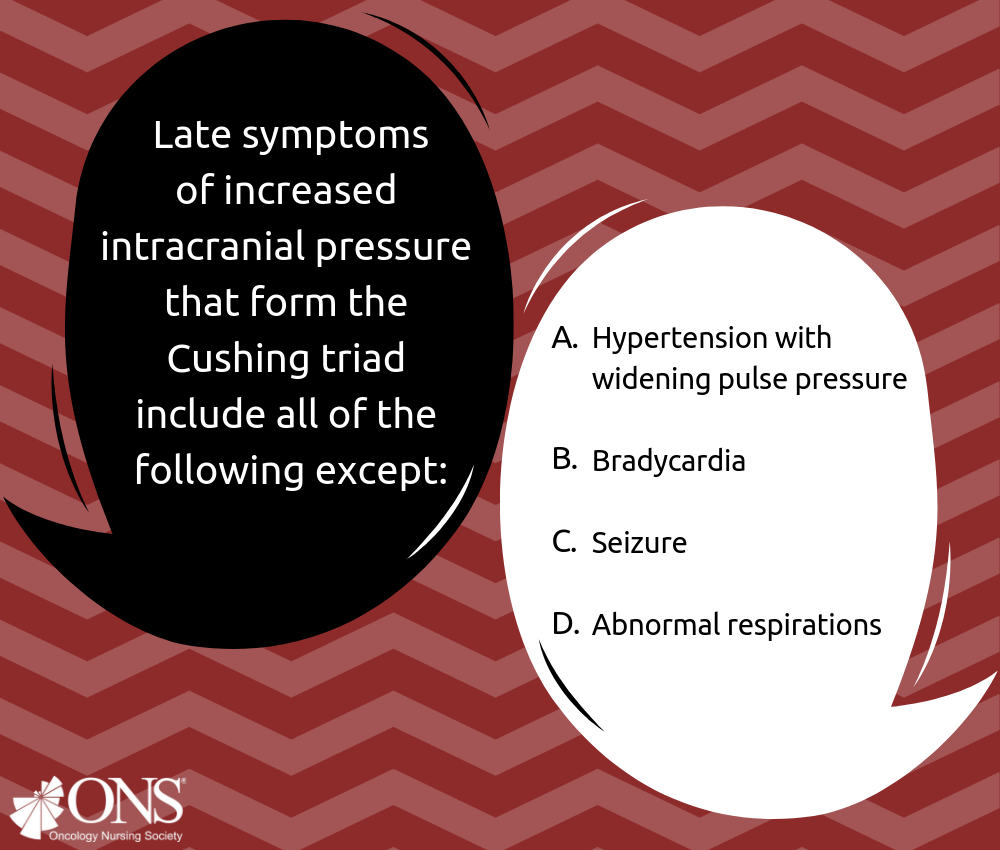 Which Of The Following Late Symptoms Of Increased Intracranial Pressure Is Not Included In The Cushing Triad Ons Voice
Respiratory changes include cheyne stokes.
Late sign of increased icp. Later signs are dilation of the ipsilateral pupil and a non reactivity to light final stage signs are bilateral dilation and fixation motor weakness and sensory deficits later signs are hemiplegia decortication or decerebration either unilateral or bilateral and triple. Increased icp in infants can be the result of injury such as falling off a bed or it can be a sign of child abuse known as shaken baby syndrome a condition in which a small child has been. Consideration must be given to determine if the symptoms a patient is displaying can be attributed to another condition such as a stroke or if they are a consequence of increased icp.
Late signs of intracranial pressure that comprise cushing triad include hypertension with a widening pulse pressure bradycardia and abnormal respiration. A sudden increase in the pressure inside a person s skull is a medical emergency. Swollen fontanelle in young children.
Late signs of a raised icp. The signs of increased icp include. Although partial and generalized seizures are considered late symptoms of increased intracranial pressure they are not one of the symptoms in cushing triad.
Head injury and obtundation. Late signs include motor changes hemiparesis raised blood pressure widened pulse pressure and slow irregular pulse. The answer is c.
Pupilary changes as a result of increased pressure on the 3rd occular motory nerve which changes the size of pupils this will result in uneven pupil sizes fixed dilated pupils any many other irregularities of pupils. Late signs of intracranial pressure that comprise cushing triad include hypertension with a widening pulse pressure bradycardia and abnormal respiration.