Bipolar disorder is primarily a biological disorder that occurs in a specific area of the brain and is due to the dysfunction of certain neurotransmitters or chemical messengers in the brain. Bipolar disorder formerly called manic depression is a mental health condition that causes extreme mood swings that include emotional highs mania or hypomania and lows depression.
 The Integrative Model Of Bipolar Disorder Pathophysiology Dysfunctions Download Scientific Diagram
When you become depressed you may feel sad or hopeless and lose interest or pleasure in most activities.
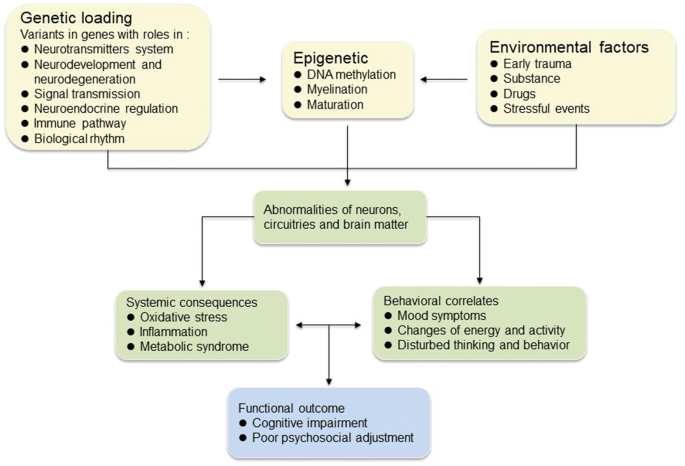
Pathophysiology of bipolar disorder. Three brain chemicals. Bipolar disorder causes shifts in a person s mood and energy levels. Pathophysiology of bipolar disorder the pathophysiology of bipolar disorder discourses to the changes of normal physiological and biochemical functions associated with the disorder.
Etiology pathophysiology clinical manifestations bipolar i disorder is a psychiatric disorder of unknown etiology that results due to an abnormal functioning of neurotransmitters in the brain often precipitated by an imbalance of glutamate norepinephrine and or gaba neurotransmitters adams urban 2016 p. Abnormalities in dopamine and glutamate signaling have been found across states of bipolar disorder. Bipolar disorder is characterized by periods of deep prolonged and profound depression that alternate with periods of an excessively elevated or irritable mood known as mania.
It is usually manageable with a correct diagnosis and suitable treatment and support. Understanding the pathophysiology of bipolar disorder is an ultimate goal of many scientists and clinicians but to date it remains poorly understood. Experts believe bipolar disorder is partly caused by an underlying problem with specific brain circuits and the functioning of brain chemicals called neurotransmitters.
5 the dopamine hypothesis of bipolar disorder suggests that hyperdopaminergia occurs during mania and hypodopaminergia during depression. 4 5 the dopamine hypothesis of bipolar disorder has been a theory of the pathophysiology of both manic and depressive phases of the illness for over 4 decades.