Spinal shock or spinal cord shock is a combination of autonomic and motor dysreflexia. It is characterized by loss of sensory and motor functions and loss of reflexes.
 Cardiac Electrophysiology Of Patients With Spinal Cord Injury Heart Rhythm
Spinal shock occurs following an acute spinal cord injury and involves a reversible loss of all neurological function including reflexes and rectal tone below a particular level.
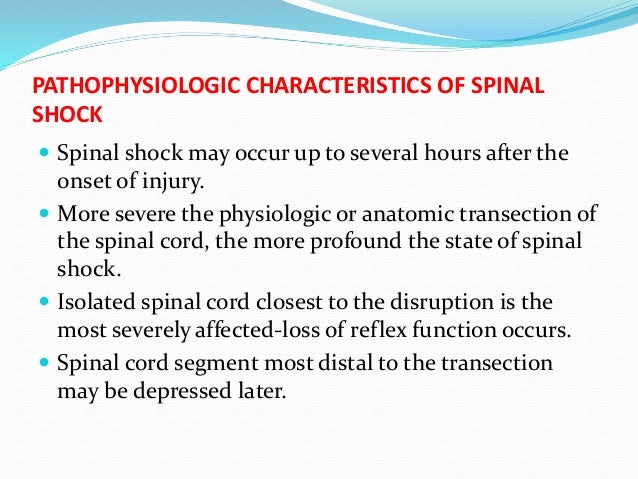
Spinal cord shock. About dysreflexia autonomic dysreflexia or spinal shock is caused by injuries of sympathetic nervous system in spinal cord or parasympathetic nervous system of sacrum. Spinal shock can occur anywhere on the spine where there is spinal cord damage. Treatments for spinal cord injury related spinal shock include.
The initial encounter with a patient that has spinal shock is usually under a trauma scenario. If you ve recently experienced a spinal cord injury it might seem like every aspect of your life has been affected. The shock in spinal shock does not refer to circulatory collapse and should not be confused with neurogenic shock which is life threatening.
Severe spinal cord injury may cause a concussive injury of the spinal cord termed spinal shock syndrome. Spinal shock manifests as distal areflexia of a transient nature that may last from a few. Neurogenic shock is often a result of injury or trauma to the spinal cord.
Reflexes in the spinal cord below the level of injury are depressed hyporeflexia or absent areflexia while those above the level of the injury remain unaffected. Spinal shock is to spinal cord injuries as fevers are to infections. The term spinal shock was introduced more than 150 years ago in an attempt to distinguish arterial hypotension due to a hemorrhagic source from arterial hypotension due to loss.
Spinal shock refers to a clinical syndrome associated with the loss of autonomic tone leading to hypothermia hypothermia and ileus below the level of spinal cord injury. It occurs when the damage is higher up above the thoracic nerves which can have an impact on autonomic responses such as your heartbeat and respiration. A spinal cord injury damage to any part of the spinal cord or nerves at the end of the spinal canal cauda equina often causes permanent changes in strength sensation and other body functions below the site of the injury.
Spinal shock is merely a symptom of an underlying problem not a disease itself. Spinal shock is not typically dangerous and other symptoms of sci are far more likely to cause serious lasting physiological issues. Neurogenic shock however is a related but slightly different condition.
It is defined as a state of transient physiologic rather than anatomic reflex depression of cord function below the level of injury with associated loss of all sensorimotor functions. It usually requires high impact direct trauma that leads to spinal cord injury and spinal shock. Spinal shock is a result of severe spinal cord injury.
As a result your body loses function and stimulation of the sympathetic nervous system your sympathetic nervous system.