Throughout the hospital stay doctors nurses and other health care providers continually assess the health of the baby observing for signs of problems or illness. Pain nicu vital signs ranges.
 A Comprehensive Newborn Exam Part I General Head And Neck Cardiopulmonary American Family Physician
In general the nicu vital signs we monitor are.
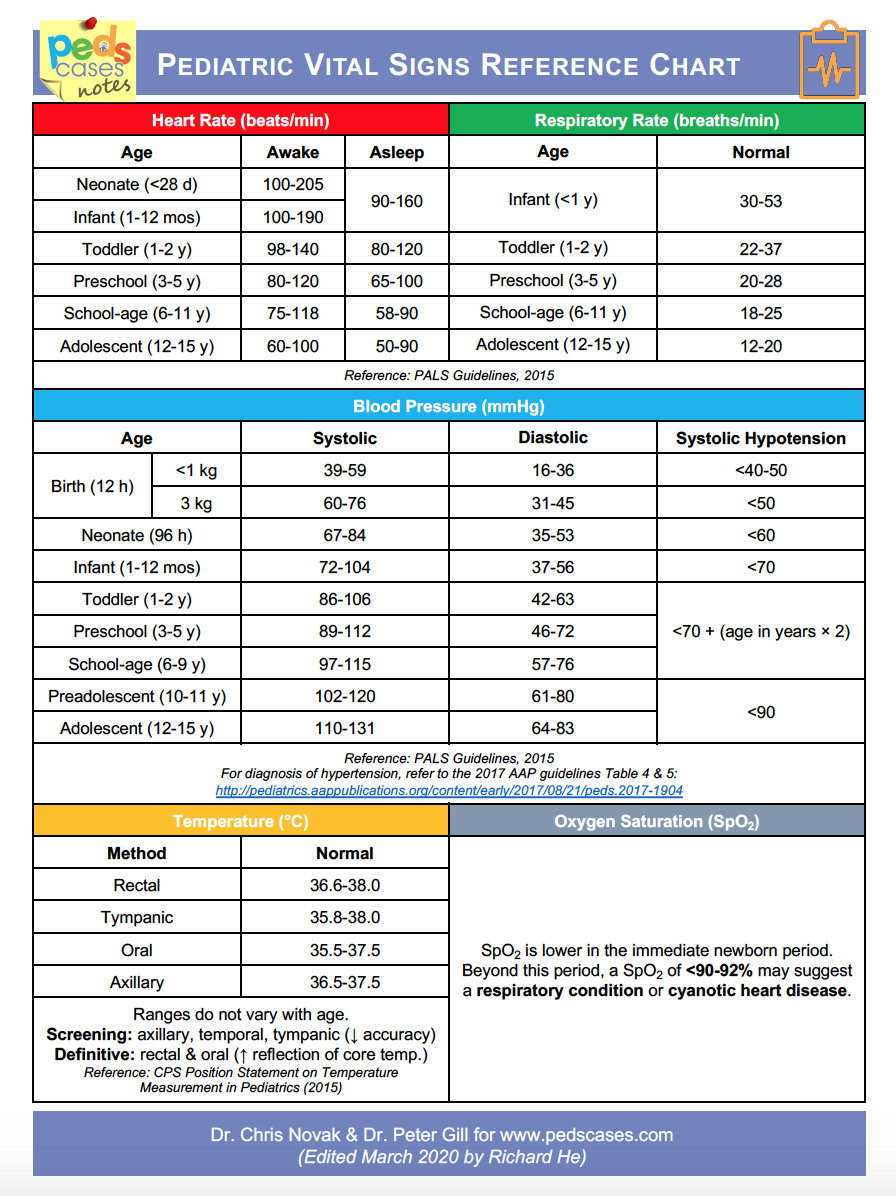
Neonatal normal vital signs. In general normal pathology values are readily available for healthy term infants. Normal laboratory values are reference ranges used by clinicians to interpret results of laboratory tests. Blood pressure pulse rate respiratory rate and temperature are the routine vital signs measured in medicine.
These vital signs remain relatively constant throughout adult life. The staff also checks these vital signs. However these brief data sampling sessions may not be sufficient to capture variability during the transition period or the effect of normal newborn behaviour such as crying quiet state unsettled or sleep on vital sign parameters gardner et al 2016 yiallourou et al 2012.
This is important in the context of defining normal ranges. The normal values for blood pressure pulse rate and respiratory rate change as the newborn infant child grows and ages. As extreme prematurity is a pathological condition in itself be cautious when using the concept of normal.
It was created by dr. Sanitize supplies before and after use perform hand hygiene before and after assessment. Peter gill a staff pediatrician at the hospital for sick children in.
Normal pediatric vital signs. In most cases when considering the correction of abnormal values it is wise to. But children are not small adults and normal vital signs are different as a newborn becomes an infant and then a child.
30 60 breaths per minute. A newborn s breathing rate is normally 40 to 60 breaths per minute. Body temperature does not change with age.
Sequence for assessing an infant s vital signs. Respirations heart rate temperature weight length head circumference chest circumference. A newborn s pulse is normally 120 to 160 beats per minute.
First foremost age. This checks that the baby is able to have a stable body temperature in normal room. Chris novak a pediatric resident at the university of alberta and dr.
This pedscases note provides a one page infographic on pediatric vital signs and covers the age based variation in normal ranges for vital signs throughout the pediatric population. Age birth 12 hrs 1000g birth 12 hrs 3kg neonate 96 hours 1 12 months 1 2 years 3 5 years 6 7 years 10 12 years 12 15 years systolic bp mm 39 59 60 76 67 84 72 104 86 106 89 112 97 115 102 120 110 131 diastolic bp mm 16 36.